
Flying BVLOS is considered a risky drone operation so please make sure that you follow all legal and safety requirements.
Safety parameters
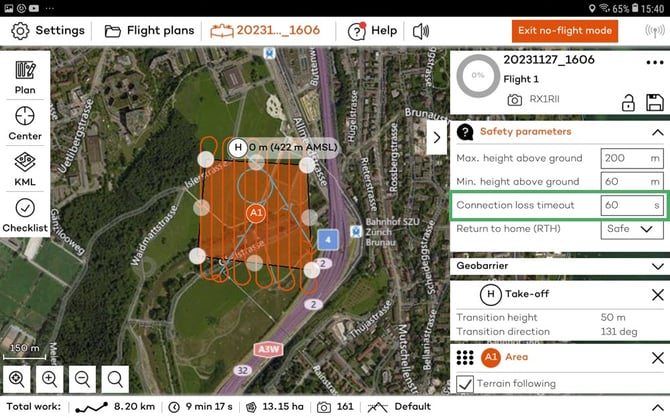
Flying BVLOS means that the telemetry link between the drone and the ground station will get lost at some point during the mission. To avoid missions getting interrupted by RTH, you would need to increase the Connection loss timeout value in the Safety parameters of the flight plan. Learn more about the RTH due to the loss of telemetry connection in the article dedicated to this topic: RTH due to loss of telemetry connection.
We strongly recommend using the Safe RTH mode for BVLOS flights. In case you want to use Direct RTH please make sure to pay special attention to Minimum RTH height above home parameter. Learn more about how to define this parameter in the article Safety parameters.
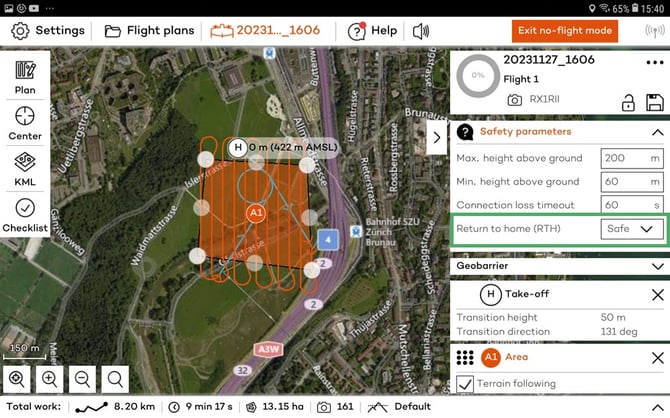
To learn more about the difference between Safe and Direct RTH please read the article Return-to-home.
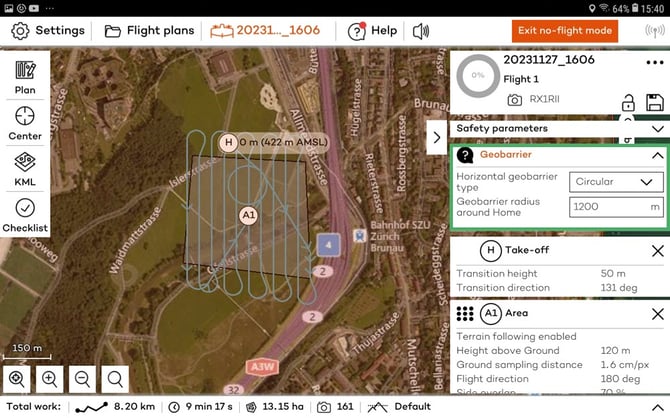
BVLOS flights usually also require an increased size of the Geobarrier. The shape and the size of the geobarrier depend on the distance between the home point and the furthest point that the drone might reach during the mission.
Can I fly BVLOS into a valley or behind a mountain?
For the special case where you have to fly behind a mountain or tall building (i.e., a mountain or building is reaching higher than the flight height), the safe return-to-home logic ensures that WingtraOne will not collide with the obstacle in case RTH is triggered while being behind the obstacle. In case you would like to fly with a direct RTH, make sure the minimum RTH height above home is at least 20m higher than the tallest object between you and any mission point.
Flying BVLOS means that the telemetry link between the drone and the ground station will get lost at some point during the mission. In order to perform the flight and prevent RTH, you likely have to increase the "connection loss timeout" (see: Safety parameters) and will fly blindly. Such a flight is considered highly risky—make sure you know what you are doing.